



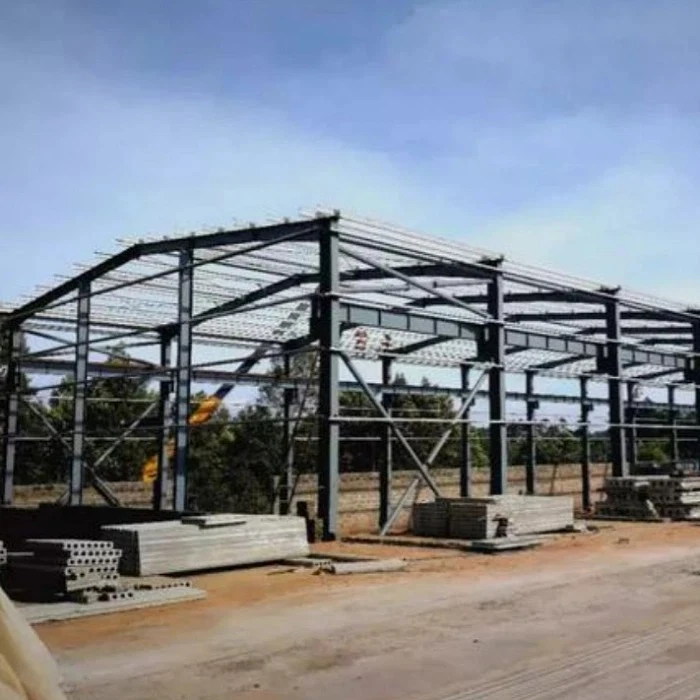
Steel Structure Warehouse
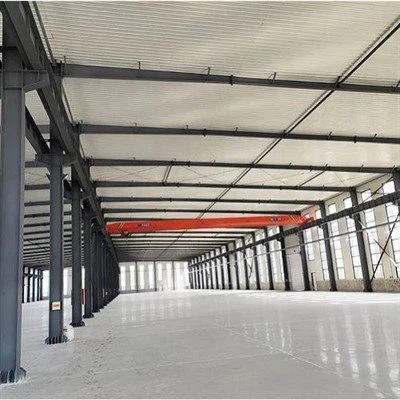
A Steel warehouse is a structural building, which is used by industries to store raw materials and the produced ready goods. Steel warehouse is also called as the industrial building. There are two types of industrial buildings such as normal type of industrial building and special type of industrial building.


Benefits of Steel Structure Warehouse
Versatility
Steel structure warehouses offer a high degree of versatility in their applications. They can be used for various purposes, such as storage facilities, manufacturing plants, distribution centers, and logistics hubs. The open and column-free design of steel structures allows for maximum flexibility in space utilization, accommodating different storage and operational requirements.
Strength and durability
One of the primary advantages of steel structure warehouses is their exceptional strength and durability. The use of high-quality steel materials ensures that these structures can withstand harsh weather conditions, seismic activities, and heavy loads. This durability translates into long-term cost savings, as steel structures require minimal maintenance and have a longer lifespan compared to traditional warehouses.
Cost-effectiveness
Steel structure warehouses are cost-effective in several ways. Firstly, the construction process is faster compared to traditional methods, reducing labor costs and project timelines. Secondly, steel structures are pre-engineered, allowing for efficient fabrication and easy installation. Additionally, the low maintenance requirements and longevity of steel structures result in reduced operational costs over the building's lifespan.
Expandability and adaptability
As businesses grow and evolve, the need for additional storage or operational space may arise. Steel structure warehouses offer the advantage of easy expandability and adaptability. Their modular design allows for seamless expansion by adding more sections or floors, without compromising the overall structural integrity. This flexibility ensures that the warehouse can adapt to changing business needs without major disruptions.
Sustainability
Steel structure warehouses are environmentally friendly and sustainable. Steel is a recyclable material, and the construction process generates minimal waste. Additionally, steel structures can incorporate energy-efficient features, such as insulation, natural lighting, and solar panels, reducing energy consumption and operating costs.
Why Choose Us
Quality assurance
We have 100% quality guarantee for our customers. We will be responsible for any quality issues.
Good service
We provide one-stop services such as project engineering solutions, R&D design, customized construction, installation and commissioning, and operation management.
Reasonable price
We provide higher quality products or services at the same price. As a result, we have a growing and loyal customer base.
Fast delivery
Strong production capacity, Complete packaging ensures product quality and is shipped to the destination in the first time.
Rich experience
Has a long-standing reputation in the industry, which makes it stand out from its competitors. With over many years of experience, they have developed the skills necessary to meet their clients' needs.
Efficient and convenient
The company has established marketing networks around the world to provide high-quality services to customers in an efficient and convenient manner.
Warehouses are essential for storing goods and commodities and have been traditionally constructed with concrete structures. However, in recent years, the demand for warehouse construction has shifted, leading to the rise of steel structure warehouse buildings. This new model allows entrepreneurs to meet the needs of the market better.
The construction of the steel structure warehouse is rapid, and the emergency advantages are apparent, which can meet the sudden storage needs of the enterprise.
The steel structure warehouse is dry construction, which has outstanding environmental protection advantages. It can reduce the impact of project construction on the environment and nearby residents, which is better than the wet construction of reinforced concrete buildings.
Steel structure warehouses can save construction and workers' costs compared with traditional concrete warehouses. Building a steel structure warehouse is 20% to 30% lower than a typical warehouse construction cost and more secure and stable.
The steel structure is light in weight, and the building materials used in the walls and roof are much lighter than those in brick-concrete walls and terracotta roofs, which can effectively reduce the overall weight of the steel structure warehouse without compromising its structural stability. At the same time, it can also reduce the transportation cost of components formed by off-site migration.

Angle steel
Angle steel, commonly known as angle steel, is a long strip of steel that is perpendicular to each other and forms an angle. There are equilateral angle steel and unequal angle steel. The two sides of an equilateral angle are equal in width. Its specifications are expressed in millimeters of side width × side width × side thickness. For example, "∠30×30×3" means an equilateral angle steel with a side width of 30 mm and a side thickness of 3 mm.
Round steel
Round steel refers to a solid steel strip with a circular cross-section. Its specifications are expressed in millimeters of diameter.
Channel steel
Channel steel is a long strip of steel with a grooved cross-section.
Steel plate
It is a flat steel material with a large aspect ratio and surface area. According to the thickness, it can be divided into three types: Thin plate (thickness<4mm), medium plate (thickness 4-25mm), and thick plate (thickness>25mm).
Steel pipe
It is a long strip of steel with a hollow section. According to its cross-sectional shape, it can be divided into round pipes, square pipes, hexagonal pipes,s, and various special-shaped cross-section steel pipes. According to different processing technologies, it can be separated into two categories: Seamless steel pipe and welded pipe.
Key Design Considerations for Steel Warehouse Buildings
Strategic location selection
The choice of location is a critical decision that extends beyond mere geography. It involves a comprehensive analysis of climate conditions, logistical accessibility, and adherence to zoning and building codes, ensuring the warehouse is strategically positioned to withstand local environmental challenges and serve its intended purpose efficiently.
Understanding load requirements
A thorough assessment of load requirements, including considerations for the weight of stored items and the operational demands of machinery, is crucial in designing a warehouse that not only meets current needs but is also capable of accommodating future demands.
Designing for future expansion
Incorporating scalability into the initial design allows for future expansion, ensuring that the warehouse can grow in tandem with the business, thereby avoiding costly relocations or extensive renovations.
What Matters Need to Be Paid Attention to When Installing a Steel Structure Warehouse
Conduct a thorough risk assessment
Before starting any steel installation project, it is crucial to conduct a thorough risk assessment. Identify potential hazards such as falls from height, manual operator injuries, and risks associated with the use of heavy machinery. Evaluate site layout, structural stability, and environmental factors that may affect safety. By understanding the risks involved, you can put in place appropriate controls to effectively mitigate them.
Ensure appropriate training and competence
A well-trained and competent workforce is essential to maintain site safety during the installation of steel structures. Provide workers with a comprehensive training program covering areas such as safe lifting techniques, the use of personal protective equipment (PPE), and emergency procedures. Regularly assess the competency of employees to ensure they are up-to-date with the latest security protocols and practices.
Adequate personal protective equipment (PPE)
Personal protective equipment plays a vital role in protecting the safety of workers during the installation of steel structures. Provide appropriate personal protective equipment such as hard hats, steel-toed boots, high-visibility vests, gloves and harnesses. Regularly inspect and maintain PPE to ensure it is in good condition and meets safety standards. Workers are encouraged to wear protective gear at all times while on site.
Keep your work area clean and tidy
A cluttered work area increases the risk of accidents during the installation of steel structures. Promote good housekeeping practices to keep the premises clean and tidy. Remove debris, secure loose tools and equipment, and establish designated storage areas. Keeping your work area tidy reduces the likelihood of trips, falls, and other accidents.
Take advantage of safety lifting technology
Lifting heavy steel components requires proper technology to prevent musculoskeletal injuries. Train workers in safe lifting operations, including bending knees, keeping their backs straight, and using lifting aids and equipment when necessary. Teamwork and communication during lifting operations are encouraged to ensure that everyone is on the same page and aware of potential hazards.
Install the steel structure safely
During installation, ensure that the steel structure is firmly anchored and supported to prevent collapse or displacement. Follow manufacturer's guidelines and engineering specifications to ensure proper installation procedures. Regularly inspect connections, welds, and fasteners to identify any signs of weakness or damage. Hire a qualified professional for a complex installation or when structural integrity is a concern.
Establish emergency response procedures
Prepare and communicate clear emergency response procedures to all workers involved in the installation of steel structures. Establish evacuation routes, rendezvous points, and accident and hazard reporting systems. Conduct regular drills to familiarize employees with emergency procedures and ensure they are able to respond effectively in critical situations.
Common Structural Forms of Steel Roof Trusses
Triangle
Economically inefficient, generally used for small-span roofs. To accommodate pitch and shape, the pitch should be greater than or equal to 1/3, and the span should be less than or equal to 21m. Considering the arrangement of purlins, the truss joints are usually spaced 1.5m or 3m apart. The large pitch of the triangle makes the truss equivalent to a variable-section beam. Due to the rapid change in section (truss height), the stress on the chord members is unfavorable, resulting in smaller stress on the chord members in the center and greater stress on the chord members at the ends.
Trapezoidal
The most commonly used form, often used as the roof structure of industrial buildings. The pitch is between 1/8 and 1/12, suitable for spans up to 36m. The stress distribution is more reasonable than the triangle's, and the change in the section is relatively stable.
Chevron-shaped roof truss
Parallel chord members are used at the top and bottom, connected in the middle, and the cross-section in the middle should be smaller than that of the trapezoidal roof truss to save material. The slope of one side of the roof is less than or equal to 1/10, suitable for spans greater than 30m. Three sections can be used when the span exceeds 42m, with a parallel section added in the middle. Corresponding supports should be provided at the fold points outside the plane.
Steel column
The main load-bearing structural components of steel structures, common industrial factory steel columns are mainly processed and manufactured by welded H-shaped steel.
Steel beam
Together with steel columns, they form a load-bearing system. Roof truss beams are also called steel frame beams. They are generally represented on drawings as GJL and WJL, and are generally made of H-shaped steel.
Wind-resistant column
A simple personal understanding is to transfer load and connect, usually expressed as KFZ, and generally made of H-shaped steel.
Purlins
Its function is to transfer the roof load (wall load) to the beams and columns through the purlins, which are generally C-shaped steel and Z-shaped steel.
Steel plate gutter
Its function is drainage. It is generally made of steel plates processed according to the design size and is usually expressed as GBTG.
Crane beam
The crane's track, usually expressed as DC, has a relatively complex structure.
Horizontal support
Increase the overall stiffness of the roof, reduce the calculated length of the chord out of the plane, save steel, and increase the lateral stability of the chord. It is generally expressed as SC and is made of round steel.
Support between columns
The main function of the inter-column support is to improve the lateral stiffness of the factory building. Simply put, it is used in conjunction with the horizontal support to jointly improve the overall longitudinal stiffness and stability of the factory building. Usually there are two types of inter-column supports: trapezoidal and steel pipe, expressed as ZC.
Tie
To reduce the lateral deformation and torsion of the purlins and improve the bearing capacity of the purlins, the braces are generally made of round steel, represented by straight braces T and diagonal braces XT.
Tie rod
The main function of the tie rod is to improve the overall stiffness of the structure, enable the structure to play a spatial role, and ensure the geometric stability of the structure and the lateral stability of the pressure-bearing components. Indicated as XG or ST, they are generally processed from round tubes.
Roof panels, wall panels
It mainly plays a protective role and is generally made of profiled steel plates or sandwich panels.
Pre-embedded anchor bolts and connecting bolts
Plays the role of connecting various components.
Pay Attention To the Maintenance of Steel Structure Warehouse
After our steel structure warehouse is installed, for the owner, it is not allowed to change its structure without permission, not to remove any bolts and other components, and it is not allowed to increase or decrease the partition wall. If you need to change any parts, you must consult with the manufacturer. Next, it is up to the manufacturer to determine whether it can be changed. The steel structure must be maintained once with paint after being used for about 3 years, so as to give the building aesthetics and safety. The steel structure warehouse is connected with steel structure parts, so the electrical equipment, such as wires and the like, should be isolated by using wire grooves and pipes to avoid electric shock accidents.
The steel structure warehouse must be regularly cleaned and maintained. Under normal circumstances, inspection and maintenance are required once a year. When cleaning the outer wall of the steel structure warehouse, it is necessary to pay attention not to have any messy phenomena. Do not use steel balls, scrubbing brushes and other abrasive cleaning products. When using clean water, they should be washed from top to bottom. Branches, leaves and similar objects on the steel structure warehouse should be removed in time to avoid unnecessary trouble caused by the backlog. If the metal plate surface of the steel structure warehouse is damaged, it should be repaired in time to prevent the sun and rain from corroding the metal plate surface. If necessary, all high-elasticity nano-materials are used to protect the metal roof panel, and play an effective role in heat insulation and waterproofing, saving energy in indoor air conditioning.
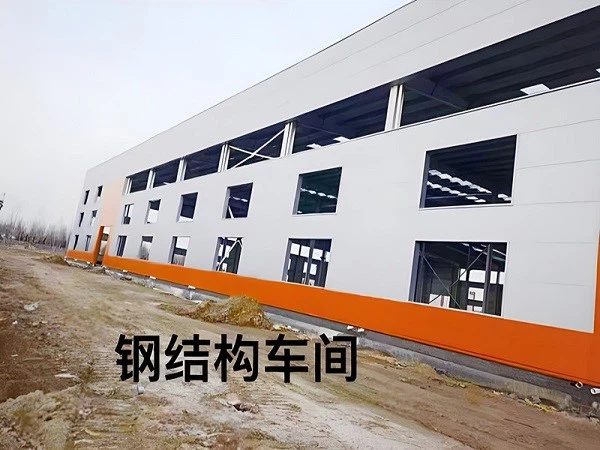
Our Factory
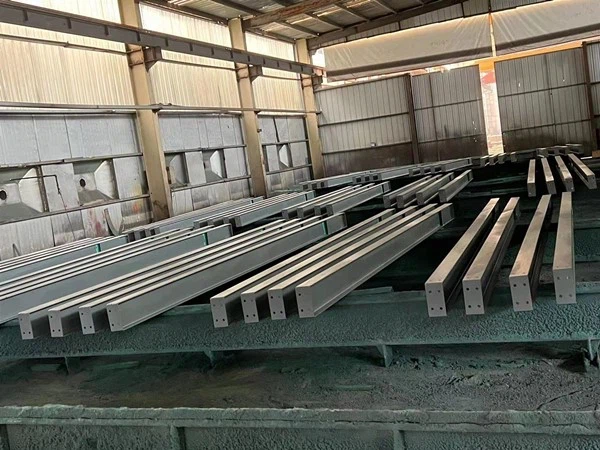
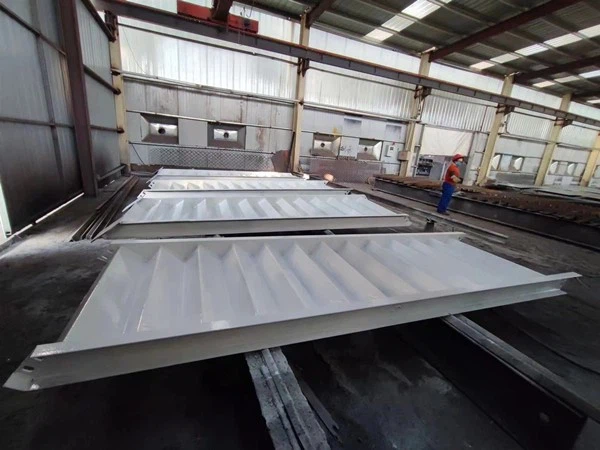
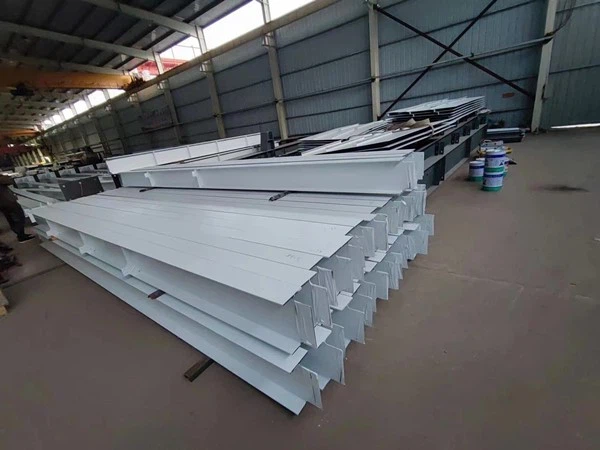
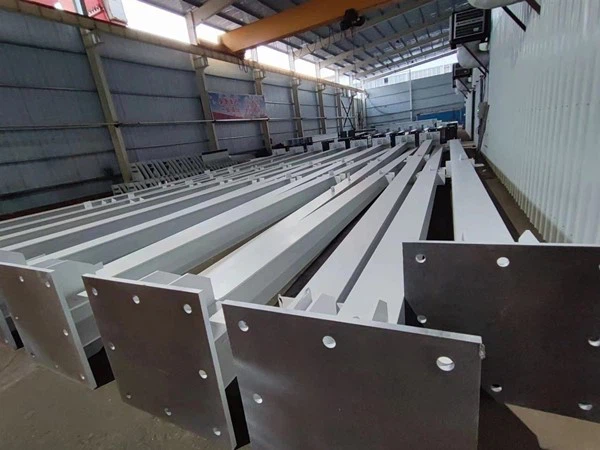
Shandong Dongsheng Heavy Industry Technology Co. , Ltd was established in August 2012, covering an area of over 50 acres and having a production workshop of 21000 square meters. It is a steel structure manufacturer specializing in the design, production, and installation of steel structures. The company has always adhered to the principle of honesty and customer first, laying a good foundation for the company's future development.





Certifications

FAQ
Hot Tags: steel structure warehouse, China steel structure warehouse manufacturers, suppliers, factory, Multi Span Steel Structure Workshop, Steel Structure Workshop Building, Single layer Steel Structure Plant, Multi layer Steel Structure Plant, Single storey Steel Structure Workshop, Single Span Greenhouse
Previous
No InformationYou Might Also Like


Send Inquiry