



Steel Truss Bridge
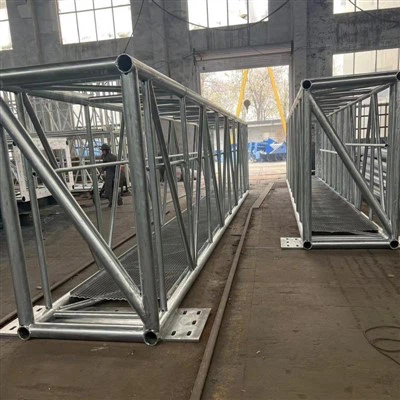
Steel Truss is a structural member usually fabricated from straight pieces of metal to form a series of triangles lying in a single plane. A truss is there to give a stable form capable of supporting considerable external load over a large span with the component parts stressed primarily in axial tension or compression. The individual pieces intersect at truss joints, or panel points. The connected pieces forming the top and bottom of the truss are referred to as the top and bottom chords respectively. The sloping and vertical pieces connecting the chords are collectively referred to as the web of the truss.




Benefits of Steel Truss Bridge
Extremely strong
The structure of interconnected triangles means the truss bridge has a huge load-carrying capacity. The structure efficiently manages compression and tension by distributing pavement loads throughout the complex structure. This means that no one part of the structure bears a disproportionate amount of weight. Kind of like a "chain is only as strong as its weakest link" situation.
Effective use of materials
Although a truss bridge has many, many connected parts to make up its structure, it uses materials very efficiently. Materials such as wood, iron and steel are utilized to the maximum extent, with each piece playing an important role in making it an efficient and pressure-resistant structure. Building large truss bridges is a very economical option compared to other bridge designs.
Withstands extreme conditions
Truss bridges come into play when other bridges such as beam bridges and arch bridges may not be feasible as it plays a very important role in certain locations both structurally and economically. They are capable of spanning long distances and are often used in dangerous places, such as deep valleys between mountaintops. You'll often see truss bridges used in mountainous areas to carry railroads and highways.
Road built on buildings
Unlike other bridge designs, truss bridges are able to carry roadways on their structure. Loads can be carried above (deck trusses), along the middle (through trusses), or on the bottom trusses below the main truss structure. These options make truss bridges both versatile and economical, suitable for construction in a variety of lengths.
Why Choose Us
Quality assurance
We have 100% quality guarantee for our customers. We will be responsible for any quality issues.
Good service
We provide one-stop services such as project engineering solutions, R&D design, customized construction, installation and commissioning, and operation management.
Reasonable price
We provide higher quality products or services at the same price. As a result, we have a growing and loyal customer base.
Fast delivery
Strong production capacity, Complete packaging ensures product quality and is shipped to the destination in the first time.
Rich experience
Has a long-standing reputation in the industry, which makes it stand out from its competitors. With over many years of experience, they have developed the skills necessary to meet their clients' needs.
Efficient and convenient
The company has established marketing networks around the world to provide high-quality services to customers in an efficient and convenient manner.
Parametric Analysis of Resilient Design of Steel Truss Bridges
Designing structures capable of resisting extreme loads has become an interesting topic, triggered by the progressive collapse of past structures. Structural failure due to inelastic design is particularly common in bridges. Bridge failure is due to a variety of factors. The goal of preventing future collapse has encouraged further research into resilient structural design. Two main elastic design approaches were implemented. These methods include incorporating robustness or redundancy into bridge design. In some cases, each method has advantages over the other. These methods are based on linear static analysis procedures. The performance of a series of two-dimensional truss bridge models with different parameters in damaged states is analyzed. Damage to bridges includes removal of piers and removal of bridge components. The results of this investigation concluded that the cost of designing resilient bridges is relatively low compared to the total cost of the bridge. Strong bridge designs are generally more effective for longer span bridges, while designs with redundancy are more suitable for shorter span bridges. As the amount of structural damage caused by bridges increases, more redundancy should be built into the structure.
Structural Elements of Truss Bridges
Truss
A truss is a systematically interconnected group of steel or iron bars and rods, which are interdependent on one another in order to create strength and turgidity in the skeleton of the truss. The elements of a truss are joined in a triangular shape. The connected elements either give tension or compression, as a result of the load and burden of the bridge and truss itself. There are several types of elements are used in truss-like beams four parallel beams of truss, struts, bracings, sway bracings, lateral bracings, and portal struts and bracings. All these elements are either compressive or tensile or both in duty.
Stringers
Stingers, in a truss bridge, are used instead of beams in beam-bridges. The stringers of the bridge are firmly jointed with the lower beams of the truss, in such a way that the stringers of the bridge is hung with the stringers of the truss. Stringers, generally, are two or more than two in number. These stringers are attached to Floor beams. The deck of the bridges is placed or constructed on the floor beams. The floor beams are not parallel to the Stringers, but rather cross-sectional.
Floor Beams
A number of short length beams which connect the main stringers at different points. The purposed of the floor beams is to survive the load of a deck of the bridge. The deck can be made of different types of elements, like metallic plates, metallic hollow plates, panels made up of precast concrete and RCC.
Deck of the Bridge
The purpose of the deck of the bridge is to accommodate the traffic. The deck of the bridge is made of concrete or metallic slabs. It is the main span of the bridges. It is installed on the floor beams horizontally.
Piers/ Abutments
Piers also called abutments and pillars of the bridge. The piers are either precast or constructed within the water body with the help of caissons or cofferdams.
Different parts of the Truss-bridges are made of different kinds of materials. The pillars, abutments, and foundations of the bridges are generally made up of CFST, RCC, and concrete, etc. However, in many areas, keeping the environment of construction in mind the piers and foundations are constructed with steel or iron. As for as the upper portion of a truss bridge is concerned, its construction is carried out with metals like steel and iron. The elements of a truss are jointed with the help of nuts and bolts. In order to prevent the truss from rusting and oxidation, it is either painted or coated with bitumen. The bitumen coat does not allow oxygen to react with iron. The maintenance of the truss is very simple. The broken parts of the truss are rejoined by means of welding and soldering, while unbroken parts of the truss are recoated with paints or bitumen. The use of bitumen is very economical.

Before steel was used in bridge construction, the common bridge types mainly include beam bridge and arch bridge. Historically, beam bridges and arch bridges were built of stone and wood. These two materials have good compressive properties but poor tensile properties. Due to the short slab of the material, the bridge span cannot be increased, and the bridge structure is also severely restricted. With the invention of steel, bridge builders can add components with strong tensile strength, making bridge types more complex. Truss bridge with better-stressed structures and better practical performance has emerged as the times require.
The truss bridge is made of high-strength steel with superior performance, so it is also called the steel truss bridge. The main structure of a truss bridge is a steel truss, which is located above or below the deck according to the load-bearing method of the bridge (upper bearing or underhanging type). The truss design distributes the load to the entire frame, which can share the load on the bridge deck. On a steel truss bridge, the size and type of force that the rod frames in different positions bear are also different, some are under pressure, and some are under tension.

The steel truss bridge consists of a steel box girder deck, a main truss composed of two steel trusses, and a steel portal frame. The steel truss consists of an upper chord, a lower chord and a web connected to the upper and lower chords through bolts. There are walkway supports on the outside of each steel truss. The lower chords are connected to the steel box girder deck and sidewalk supports respectively. The two steel trusses are connected by a steel portal frame. During production, each section of the steel truss, steel portal frame, and bridge deck is manufactured independently; the upper and lower chord sections of the steel truss are cyclically pre-assembled with the corresponding web rods, and each section of the steel box girder deck is cyclically pre-assembled with the corresponding lower chord. Pre-assembly using the forward construction method; pre-assembly of steel portal frames and steel trusses. The steel truss bridge fully meets the design requirements and improves the stability and safety factor of the bridge. Using this production method, positioning is accurate and the risk of on-site assembly can be reduced. And the construction period can be shortened.
How Much Weight Can a Truss Bridge Hold
This depends on the load (s) being applied to the bridge. Once an Engineer has determined the forces and loads that will act upon a bridge then he can start the design process selecting the proper bridge structure that will support these forces and loads. Let's suppose that a bridge has to support 4 medium size cars at any time. Lets say the cars weigh 2-1/2 tons or 5000 lbs each and we assume the cars are in single file moving across the bridge. Though the car's load is distributed across the bridge it would be viewed as a single reactive load of 20,000 lbs. This builds in a factor of safety. The Engineer would then design a structure where the largest deflection point caused by this 20000 lb load, presumably the center of the bridge span, could support the cars. There are many other force variables to consider other than the load of the cars. There are wind factors, soil factors, earthquake calculations, etc.
With the increasing demand for long-span bridges and the continuous advancement of construction technology, steel truss bridges have become more and more widely used. The joint forms of steel truss bridges can be divided into two types: Spliced joints and integral joints. The selection of joint forms of steel truss bridges has gradually become the focus of designers and researchers. Combined with the engineering case of steel truss bridge, the characteristics and advantages of spliced joints and integral joints are introduced respectively. The engineering performance of these two joints was compared under the same operating conditions. The corresponding joint selection conclusions are drawn, and the outlook for the design of steel truss bridge joints is put forward.

What Are the Maintenance Requirements for Steel Truss Bridges
The best maintenance and preservation strategy for preservation of steel truss bridges is to keep them painted and free from accumulated debris. This will minimize the effects that environmental factors and water have on the lifespan of the coating system, which when broached allows corrosion to form on the metal.
Our Factory
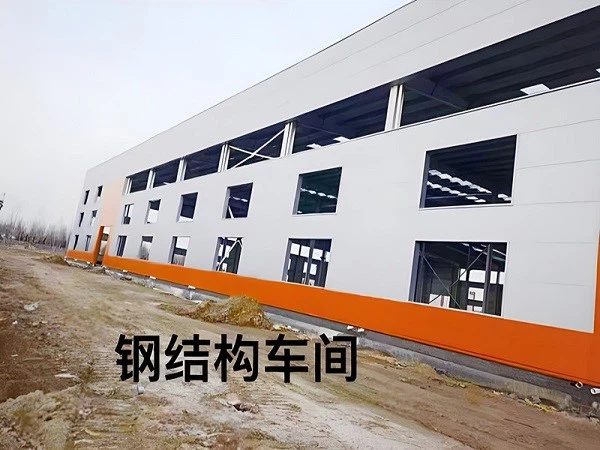
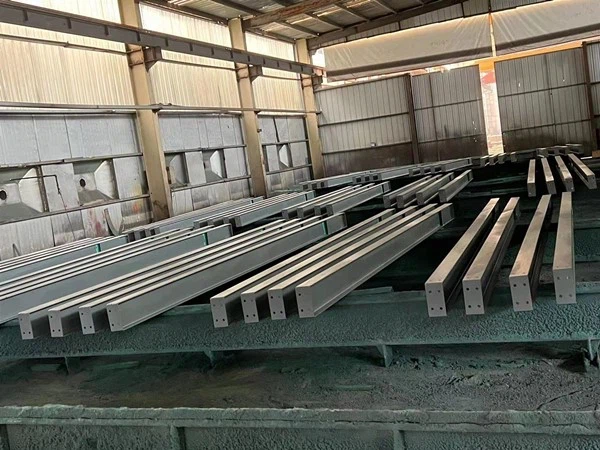
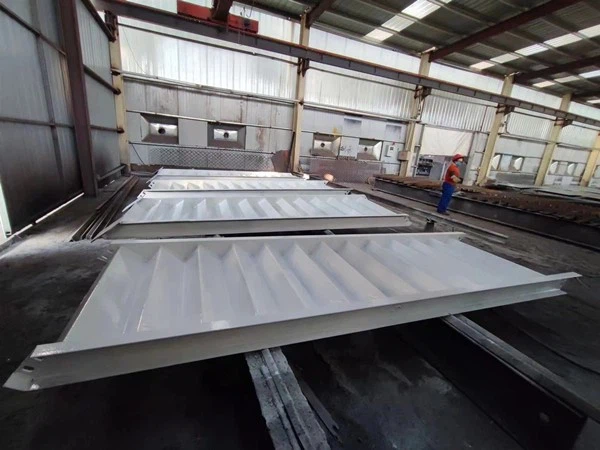
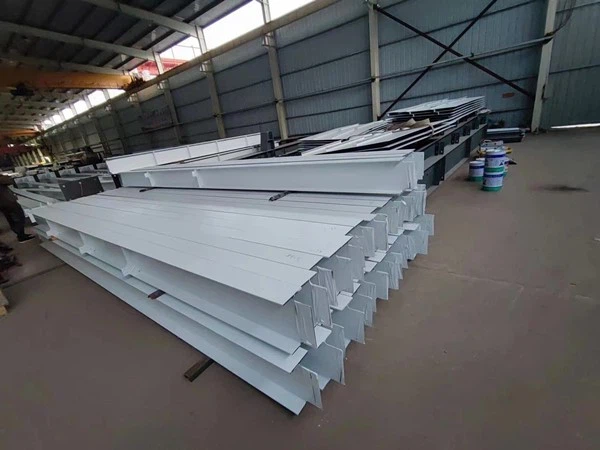
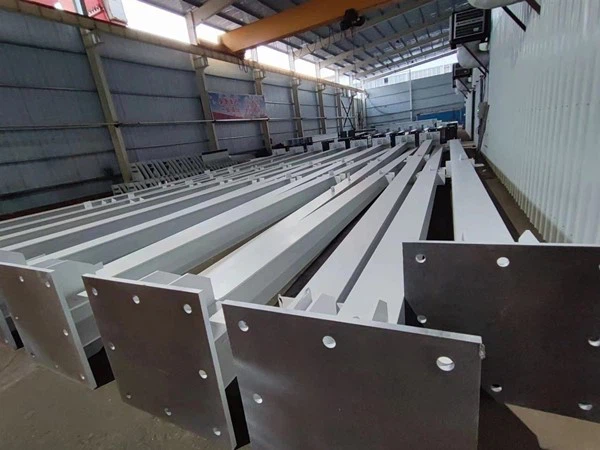
Shandong Dongsheng Heavy Industry Technology Co. , Ltd was established in August 2012, covering an area of over 50 acres and having a production workshop of 21000 square meters. It is a steel structure manufacturer specializing in the design, production, and installation of steel structures. The company has always adhered to the principle of honesty and customer first, laying a good foundation for the company's future development.





Certifications
