



Monitor Pole
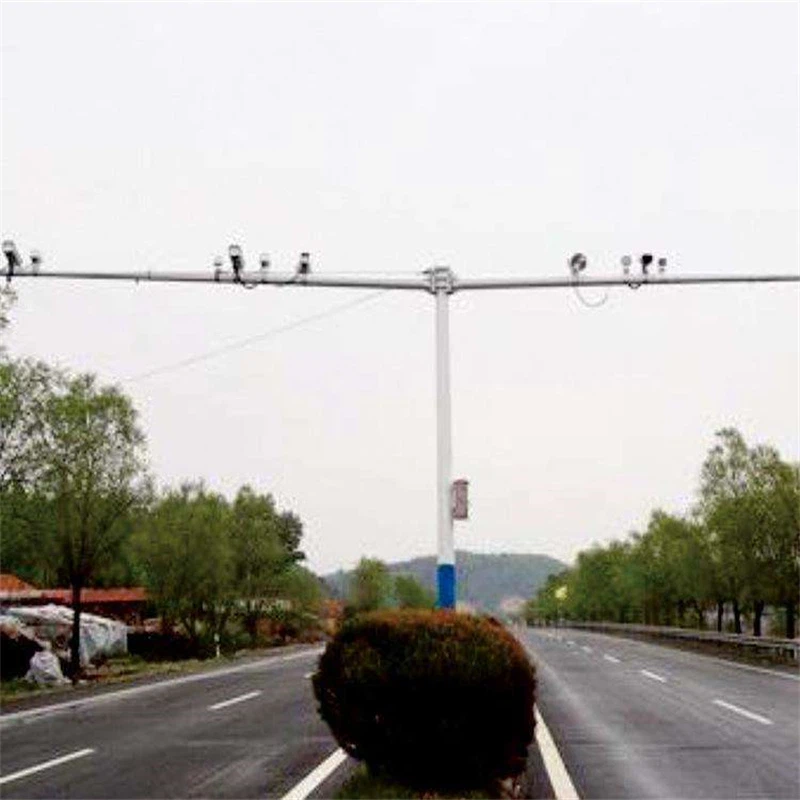
Surveillance poles are a common surveillance system used to monitor the security of public places and private environments. These poles are typically equipped with one or more cameras that capture images and audio of the surrounding environment and transmit them to a remote monitoring center.


Benefits of Monitor Pole
Comprehensive Coverage
Security camera poles provide unparalleled surveillance coverage. Their elevated position provides unobstructed panoramic views and eliminates blind spots. With these poles, you can ensure that your property is monitored. Whether it’s a parking lot, industrial site or residential area, you’ll have 360-degree visibility to ensure nothing escapes scrutiny. This comprehensive coverage is your ticket to ultimate security and peace of mind.
Enhanced Safety
Beyond deterrence, security camera poles actively contribute to enhanced safety for your property and its occupants. In environments such as parking lots, parks, campuses, and industrial facilities, these poles create a reassuring aura of security. People feel protected and at ease, knowing that a vigilant guardian is watching over them. This sense of safety extends to employees, customers, and visitors, fostering a secure atmosphere that is invaluable for businesses and communities alike. With security camera poles, safety becomes an integral part of your environment, promoting well-being and peace of mind.
Reduced Liability
Security camera poles play a crucial role in reducing liability for property owners and businesses. By providing a detailed record of events and activities on your premises, they offer a layer of protection against false claims and lawsuits. In the event of accidents, disputes, or incidents, having clear video evidence can help establish the facts and prevent unjust legal repercussions. This reduction in liability not only safeguards your assets but also promotes a safer and more responsible environment for all stakeholders.
Improved Incident Resolution
Security camera poles play a vital role in resolving incidents quickly. With its high viewing angles and clear video footage, identifying and understanding what's going on is a breeze. Whether it's a trespass issue or a security issue, documenting existing evidence helps law enforcement and security personnel act quickly. This feature not only increases safety but also helps mitigate potential damage or loss.
Remote Monitoring and Alerts
Security camera poles offer the convenience of remote monitoring. You can keep an eye on your property from anywhere, at any time. Even better, many systems come with real-time alerts that notify you of suspicious activity. This instant information empowers you to respond promptly, preventing potential security breaches and safeguarding your property, day or night. In addition to live feeds, these systems often provide access to recorded footage. This historical data is invaluable for reviewing past events, verifying incidents, or simply keeping track of activities on your property.
Scalability and Expandability
Security camera poles are highly adaptable to changing needs. As your property or surveillance requirements grow, these systems can easily scale and expand. You can add more cameras or upgrade existing ones without major overhauls. This scalability ensures that your security infrastructure remains effective and up-to-date, providing long-term value and protection.
Why Choose Us
Quality assurance
We have 100% quality guarantee for our customers. We will be responsible for any quality issues.
Good service
We provide one-stop services such as project engineering solutions, R&D design, customized construction, installation and commissioning, and operation management.
Reasonable price
We provide higher quality products or services at the same price. As a result, we have a growing and loyal customer base.
Fast delivery
Strong production capacity, Complete packaging ensures product quality and is shipped to the destination in the first time.
Rich experience
Has a long-standing reputation in the industry, which makes it stand out from its competitors. With over many years of experience, they have developed the skills necessary to meet their clients' needs.
Efficient and convenient
The company has established marketing networks around the world to provide high-quality services to customers in an efficient and convenient manner.
What Are the Differences Between Monitoring Poles Made of Different Materials
Monitoring poles are generally made of two materials, one is the traditional steel pipe monitoring pole, and the other is the expensive stainless steel monitoring pole. The service life of monitoring poles made of both materials can reach more than 20 years, but there are certain differences. What stainless steel monitoring poles and iron monitoring poles have in common is that they are equipped with camera brackets, both have strong wind and earthquake resistance, and are produced with anti-corrosion and anti-rust capabilities. They are both beautiful and practical. plan.
The dimensions of stainless steel monitoring poles and iron monitoring poles vary. The size of stainless steel is generally smaller, and 90mm tubes, 115mm tubes, etc. are usually used. The octagonal one can only be made of iron material. Therefore, the market for iron material monitoring poles is more flexible and changeable.
The biggest difference is the price of raw materials. The price of stainless steel raw materials is about several times that of iron. Especially the price of 304 stainless steel raw materials is more expensive. If stainless steel raw materials are used to manufacture monitoring poles, the investment will be several times that of iron monitoring poles. Appointments.
The hardness of stainless steel monitoring poles is not as good as that of iron monitoring poles. Stainless steel monitoring poles have low hardness and poor wind and impact resistance. Stainless steel monitoring poles are generally used for community security monitoring and are generally not used for monitoring projects such as urban roads. Choose to use stainless steel monitoring poles!
What Are the Factors That Affect the Price of Monitoring Poles
A surveillance pole is a device used to install surveillance cameras. Usually made of steel pipe or aluminum alloy, the height can be adjusted as needed. The price of monitoring poles is affected by many factors such as material, specifications, quantity, installation cost, etc. The price of monitoring poles ranges from a few hundred yuan to several thousand yuan, depending on the actual situation.
The material of the monitoring pole is an important factor affecting the price. Different materials have different strength, corrosion resistance, aesthetics and other properties, as well as different costs. Steel tubing poles are less expensive than aluminum alloy poles, but the weight and maintenance costs of steel tubing poles must also be taken into consideration. Although aluminum alloy poles are more expensive, they also have the advantages of being lightweight, durable, and beautiful.
The specifications of the monitoring pole are also factors that affect the price. Different specifications have different diameter, thickness, length and other parameters, as well as different load-bearing capacity and stability. The larger the specifications of the pole, the higher the price, but you must choose the appropriate specifications according to actual needs, not too big or too small.
The number of monitoring poles is also a factor that affects the price. Different quantities have different wholesale discounts and shipping costs. The greater the number of light poles, the lower the unit price, but inventory and installation space issues must also be considered. In addition, the quotations and service quality of different suppliers are also different, which requires careful comparison and selection.
The installation cost of monitoring poles is also a factor that affects the price. Different installation methods have different difficulties and working times. The installation methods are divided into two types: buried type and bolt type. The underground type requires digging holes and burying them in the foundation, while the bolt type requires drilling holes in the ground to fix them. The embedded type is more time-consuming and labor-intensive than the bolt type, but it is also stronger and more stable. Installation fees are usually charged by the installer or supplier and need to be communicated and negotiated in advance.

The surface treatment of traffic light poles requires good rust resistance. Of course, there are special requirements for the highway monitoring pole: the appearance requires equal diameter, cone type and variable diameter; the wind resistance capacity also needs to be very superior. Of course, its wind resistance is also related to welding technology. Generally, it is required to be able to reach 45m/s; for the welding process requirements of traffic light poles, the welding must be smooth, polished, and welded firmly. In addition, traffic light pole manufacturers also require road monitoring pole to adapt to altitude, temperature difference and other performance.
It is important to choose a more suitable traffic light pole, and its advantages are more obvious. Whether it is quality reliability or quality advantage, quality assurance can be obtained. The achieved performance guarantee will also have a more outstanding performance, which is a link that deserves more attention.
Choosing a better traffic light pole can not only satisfy the use of lights, but also have a wider viewing angle for monitoring. As an important guarantee of road safety, as well as an important means of chasing the perpetrators of traffic accidents, we must ensure that the monitoring data can be more accurate, which is the key link that must be paid attention to.
Choose the right pole
Select a sturdy and stable pole that can support the weight of the camera and withstand environmental conditions such as wind and rain. Ensure that the pole is tall enough to provide an optimal view of the area you want to monitor.
Position the camera
Determine the ideal location for the camera on the pole. Consider factors such as the camera's field of view, angle, and distance from the area of interest. It is recommended to position the camera at a height that is difficult to reach or tamper with.
Attach the mounting bracket
Use a mounting bracket specifically designed for pole installations. Securely attach the bracket to the pole using appropriate screws or clamps. Ensure that the bracket is level and tightly fastened to prevent any movement or slippage.
Connect the camera
Once the bracket is securely mounted, attach the CCTV camera to the bracket using the provided screws or mounting mechanism. Ensure that the camera is aligned properly and tightened securely to prevent any misalignment or movement.
Adjust the camera angle
Adjust the camera's angle and direction to achieve the desired field of view. Use the camera's pan, tilt, and zoom features, if available, to fine-tune the positioning. It is recommended to test the camera's view before finalizing the installation.
Secure the cables
Properly secure and route the camera's cables along the pole to prevent any damage or interference. Use cable clips or conduit to keep the cables organized and protected from the elements.
Test the camera
After the installation, test the camera to ensure that it is functioning correctly. Check the video feed, adjust any settings if necessary, and verify that the camera is capturing the desired area effectively.
Maintenance Steps for Monitoring Poles
Regularly inspect the monitoring poles
Inspect the monitoring poles at least once a year, including the structural condition of the monitoring poles, coating integrity, wires and connections, etc.
Cleaning
If the monitoring pole is exposed to the outside environment for a long time, dust and dirt may accumulate. Use a soft, damp cloth or sponge for regular gentle cleaning, taking care to avoid using caustic cleaners.
Anti-rust treatment
If the monitoring pole is made of metal, anti-rust treatment should be carried out regularly. Anti-rust paint or anti-rust oil can be applied.
Wire maintenance
The wires and connectors of the monitoring pole are wearing parts and need to be checked regularly for damage or aging. Broken or deteriorated wires and connectors should be replaced if necessary.
Adjustments and Calibration
Calibrate and adjust surveillance cameras regularly to ensure they are accurately capturing the desired images.
Preventive Maintenance
To prevent possible damage, avoid applying excessive force to the monitor pole and its attachments. Regularly check whether all accessories of the monitoring pole are secure, such as whether screws and fasteners are loose.
Monitoring poles are composed of multiple components. The shaft is the basic component of the pole. It is usually made of steel or aluminum alloy. Light pole head, used to support monitoring equipment and lighting fixtures. The base part is used to fix the entire pole. It is usually made of concrete or steel and needs to be buried deep underground to ensure stability. Electronic components such as power cords and signal lines. These components are typically placed within the pole and are used to connect power and signal transmission to monitoring equipment, lighting fixtures, and other electronic components. The combination of these components makes the monitoring pole an efficient, safe and reliable device that meets the needs of social security and urban management. Monitoring poles can carry many components. It is mainly composed of embedded steel structure, mounting flange, special-shaped arm, connecting flange and vertical pole. In our daily life, we can often see the form of monitoring poles. There are two types of monitoring poles: straight tube type and tapered tube type.
Our Factory
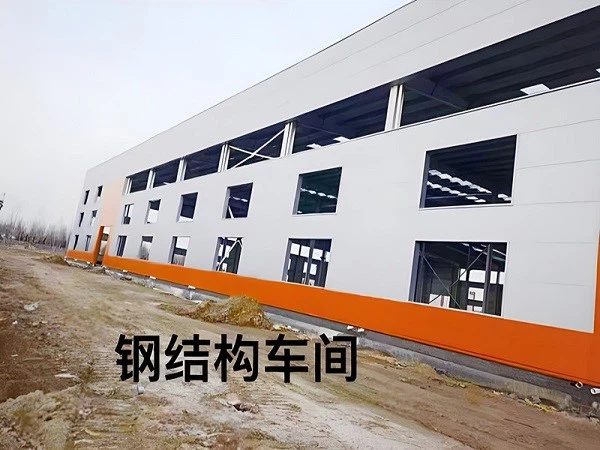
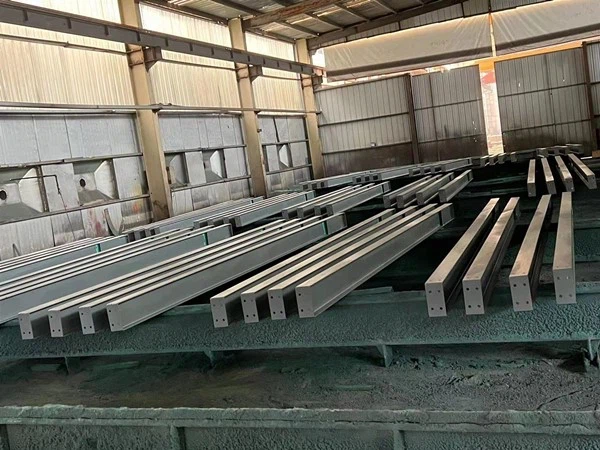
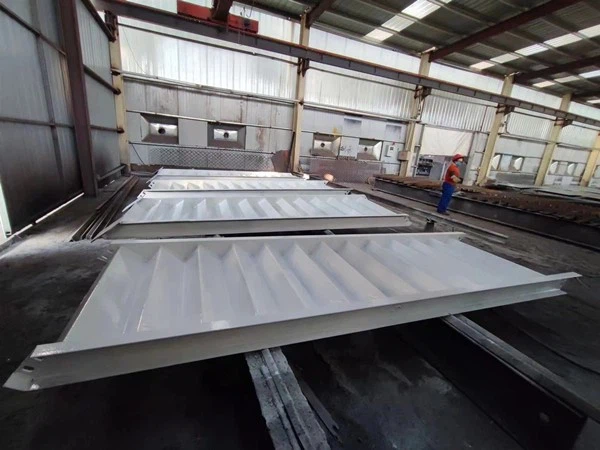
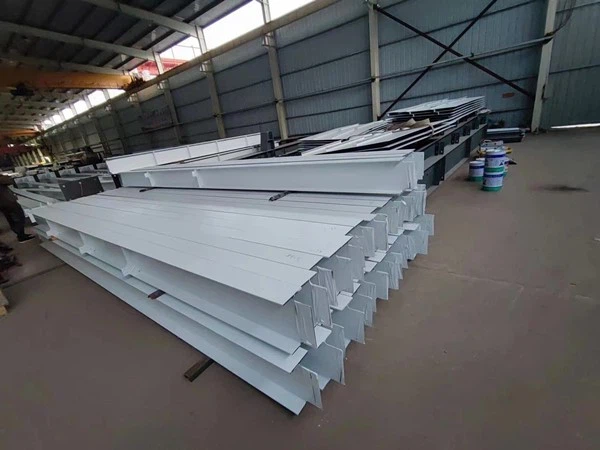
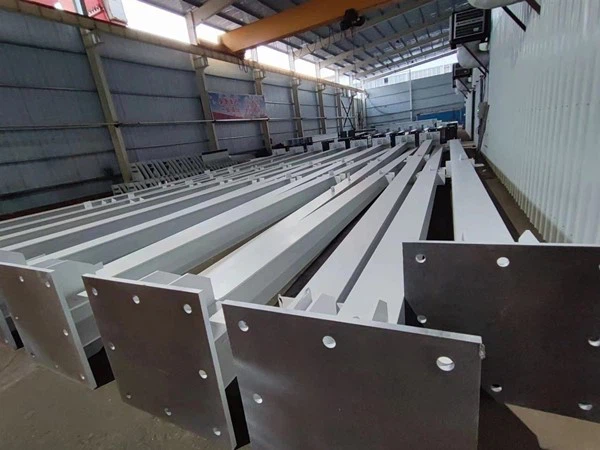
Shandong Dongsheng Heavy Industry Technology Co. , Ltd was established in August 2012, covering an area of over 50 acres and having a production workshop of 21000 square meters. It is a steel structure manufacturer specializing in the design, production, and installation of steel structures. The company has always adhered to the principle of honesty and customer first, laying a good foundation for the company's future development.





Certifications
