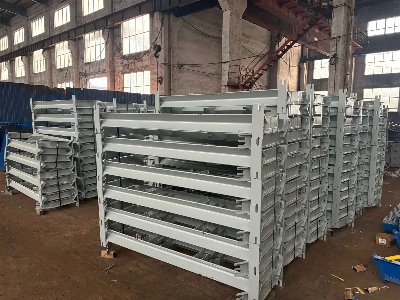
Custom-made conveyor roller frames are exclusive support components designed based on the client's specific conveying scenario, equipment parameters, and special requirements. Their core function is to precisely adapt to the existing conveyor system, fixing the rollers, bearing the weight of the conveyor belt and materials, and guiding the conveyor belt to run smoothly. The precision of customization and the quality of the manufacturing process directly determine the adaptability, operational stability, and service life of the conveyor. They are widely used in the mining, metallurgy, chemical, port, and building materials industries to meet their diverse material conveying needs.
The core premise of custom manufacturing is accurately meeting the client's requirements. This requires comprehensive data collection on the client's existing conveyor frame dimensions, roller models, characteristics of the conveyed materials (such as particle size, weight, and corrosiveness), operating speed, and installation space limitations. Simultaneously, the client's specific requirements for load-bearing capacity, service life, and rust prevention level are considered to conduct structural design and solution optimization. Compared to standard roller frames, custom-made frames allow for flexible adjustment of the main frame dimensions, connecting plate hole positions, and welding structure. They can adapt to different roller arrangements such as trough, parallel, and self-aligning types, and can also optimize structural strength and protective processes for special scenarios such as material drop point impact and moisture corrosion.
Customized material and process adaptation is key. Based on customer needs, Q235B angle steel or channel steel is used for welding in standard scenarios, balancing cost and strength; for heavy-duty scenarios, Q345B material is upgraded with increased wall thickness to improve impact and fatigue resistance; for humid and corrosive environments, customized hot-dip galvanizing, powder coating, cathodic protection, and other rust-proofing processes are used, or stainless steel is used directly. Customized tooling is used for positioning during welding, and welding parameters are strictly controlled to avoid incomplete or missed welds. Stress relief treatment is performed after welding to prevent long-term deformation and ensure the frame's accuracy and structural stability.
Custom processing requires strict control over accuracy and compatibility acceptance. During processing, key parameters such as bracket dimensions, hole accuracy, and idler roller installation wheelbase are tested from multiple dimensions, with errors controlled within ±0.5mm, ensuring precise alignment with the customer's existing conveyor belt frame and idlers, avoiding problems such as conveyor belt misalignment and uneven idler stress after installation. To meet specific customer needs, additional buffer plates, reinforcing ribs, and other structural elements can be added to optimize load-bearing capacity and mitigate damage to the frame and conveyor belt from material impacts.
Furthermore, customized idler frames also require accompanying installation guidance and after-sales support to assist customers in assembly and commissioning, and to regularly monitor operational status. During routine maintenance, customers should focus on inspecting fasteners, welded areas, and protective layers, promptly addressing wear and corrosion issues. Leveraging the advantages of customization, equipment maintenance costs are minimized, ensuring continuous and efficient operation of the belt conveyor. Furthermore, subsequent optimization and modification services can be provided based on customer iterative needs, deepening the value of the partnership.